
THE GUARDIAN OF BLUE HORIZONS
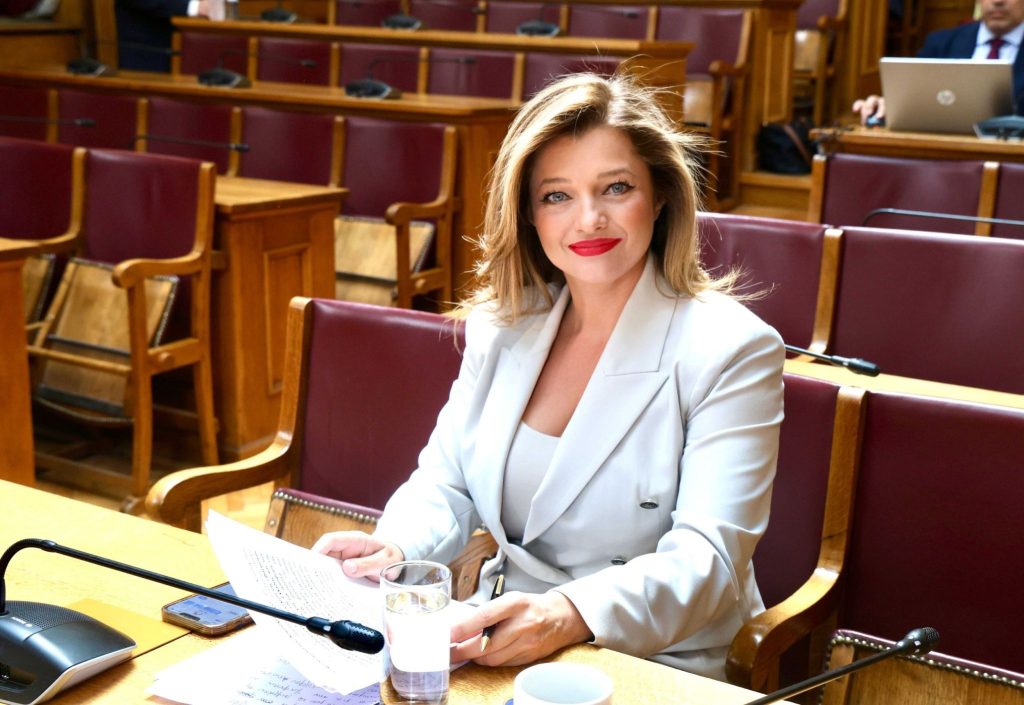
Dr. Dionysia-Theodora Avgerinopoulou, Greek Prime Minister’s Special Envoy for the Ocean, Member of the Hellenic Parliament, Chair of the Environment Committee, Member and Former Vice-President of the Executive Committee of the Inter-Parliamentary Union
In an era when environmental crises threaten the very foundations of human civilization, a new generation of leaders has emerged at the intersection of law, diplomacy, and ecological stewardship. Among them stands Dr. Dionysia-Theodora Avgerinopoulou, a Greek parliamentarian, international legal scholar, and ocean diplomat whose influence extends from the ancient shores of Athens to the corridors of global governance in Geneva and beyond.
Her story is one of profound connection, where a childhood spent along Greece’s crystalline coastlines evolved into a lifelong mission to protect the world’s oceans through the power of international law. It is a journey that has taken her from doctoral studies in international organizations to the highest levels of parliamentary diplomacy, from chairing environmental committees to mobilizing billions of dollars for ocean conservation, and from legal scholarship to practical policymaking that shapes the future of our planet.
“From a very young age, I felt a deep connection with nature,” Dr. Avgerinopoulou reflects. “Growing up in Greece, a country with unique biodiversity, a long coastline, and a history so closely tied to the sea, I became acutely aware of both the beauty of our natural environment and its fragility.”
This awareness, coupled with her legal training, would forge a unique perspective that has made her one of the most influential voices in global environmental governance today.
WHEN LAW BECOMES A FORCE OF NATURE
The intersection of environmental policy and international law is where Dr. Avgerinopoulou found her calling. During her legal studies, a realization crystallized that would define her entire career trajectory. She understood that environmental challenges recognize no borders, and that law and policy could provide the essential framework for collective solutions across nations.
Her doctoral research focused on international organizations and their capacity to respond to global environmental crises. This academic foundation, combined with subsequent work in diplomacy and parliament, convinced her to dedicate her career to building bridges between law and policy, between national and global governance, and ultimately between people and the environment that sustains them.
“Law is both a shield and a tool for transformation,” she explains. “My legal background allows me to identify gaps in existing frameworks, advocate for binding commitments, and design solutions that are enforceable and fair.”
This perspective has taught her to see environmental protection not merely as a moral imperative but as a matter of rights, obligations, and enforceable frameworks. International law, in particular, has given her the tools to understand how global governance functions, from treaties on climate and biodiversity to groundbreaking new agreements like the BBNJ Treaty on the high seas. This legal lens helps her translate complex international commitments into practical policies at the national and parliamentary level, ensuring that ambitious goals become binding standards rather than empty promises.
Her focus extends beyond environmental issues alone. Through her work with the Inter-Parliamentary Union, she addresses geopolitical conflicts, human rights, and emerging challenges such as health, digitalization, and artificial intelligence, always through the spectrum of international law and cooperative governance.
THE INTER-PARLIAMENTARY UNION: A GLOBAL PLATFORM FOR TRANSFORMATIVE ACTION
The Inter-Parliamentary Union stands as the world’s leading global parliamentary body, uniting legislators from across the globe to address humanity’s most pressing challenges. For Dr. Avgerinopoulou, the IPU represents far more than a diplomatic forum—it is a powerful vehicle for translating parliamentary will into transformative global action on environmental protection and multilateralism.
Her role as Vice President of the Inter-Parliamentary Union marked a watershed moment in her career and in the history of Greek parliamentary representation. She became the first Greek parliamentarian ever to assume this position, a distinction that speaks to both her exceptional standing among international colleagues and the vital importance of parliamentary leadership in global environmental governance. The unanimous vote reflecting this appointment demonstrated the confidence of her peers from all regions in her ability to advance environmental diplomacy, human rights, and multilateral cooperation on the world stage.
This was not merely a ceremonial position but a platform of genuine authority from which to mobilize parliamentary action across continents. The IPU, functioning as the global house of parliaments, offers an unparalleled opportunity to share best practices and accelerate the adoption of climate legislation and clean technologies worldwide. Through strategic coordination and diplomatic finesse, Dr. Avgerinopoulou helped transform the IPU into an even more effective vehicle for environmental action, demonstrating that leadership transcends holding office. It is fundamentally about building trust, fostering cooperation, and mobilizing collective will to achieve tangible global impact.
During her tenure, she showed that parliaments can drive innovation by creating the right laws, funding mechanisms, and oversight to turn scientific research into practical solutions. The IPU’s unique capacity to convene legislators from diverse political systems, cultures, and economic contexts enabled her to champion cross-parliamentary cooperation on climate action, ocean governance, and sustainable development. Her work at the IPU reinforced a critical insight: when national parliaments align their efforts through international institutions, they possess the collective authority to shape the trajectory of global policy.
Beyond her formal position, Dr. Avgerinopoulou continues to leverage the IPU’s platform to strengthen parliamentary involvement in environmental decision-making. She recognizes that parliaments are uniquely positioned to bridge the gap between international commitments and national implementation, ensuring that agreements made in Geneva become laws enacted in capitals, and that domestic constituencies hold governments accountable to their climate and ocean pledges.
A HISTORIC ASCENT TO GLOBAL INFLUENCE
Dr. Avgerinopoulou’s election as Vice President of the Inter-Parliamentary Union represents one of the defining moments of her career and her influence on the world stage. The significance of this achievement cannot be overstated. Her role at the IPU demonstrates the power of parliamentary leadership to mobilize global action on the issues that matter most to humanity’s future.
Her tenure showed that when legislative bodies work together through institutions like the IPU, they can drive meaningful change—from advancing climate legislation to protecting biodiversity, from strengthening human rights frameworks to addressing emerging global challenges. This experience has positioned her as a thought leader within the global parliamentary community, someone whom legislators across borders look to for guidance on navigating the complex intersection of environmental protection, international law, and democratic governance.
ATHENS 2024: WHERE AMBITION MET THE OCEAN
Another milestone that would cement Dr. Avgerinopoulou’s legacy came in 2024 when, as the Prime Minister’s Special Envoy for the Ocean, she coordinated the 9th Our Ocean Conference in Athens. The results were nothing short of historic. The conference collectively mobilized more than 11.3 billion dollars in commitments for ocean action, the highest amount in the conference’s entire history.
Her top priority was ensuring that the gathering would not be just another international meeting but a genuine turning point for global ocean action. The conference focused on three essential pillars: mobilizing unprecedented levels of financial commitments and joint action; securing ambitious pledges for the protection of marine biodiversity, including Greece’s announcement of two new large marine parks; and strengthening international cooperation on issues such as sustainable shipping, the blue economy, and the fight against marine pollution, marine biodiversity decline, climate crisis, and plastic pollution.
“Above all, I wanted Athens to send a clear message: the ocean is central to our shared future, and protecting it requires ambition, innovation, and solidarity,” she states.
The success of the Athens conference elevated Greece as a global hub for ocean diplomacy, showcasing the nation’s leadership in convening diverse stakeholders from governments, civil society, scientists, and the private sector. It demonstrated that when vision meets meticulous planning and inclusive dialogue, transformative outcomes become possible.
GREECE AS THE BRIDGE BETWEEN SEAS AND NATIONS
Greece’s unique position in global ocean diplomacy is something Dr. Avgerinopoulou understands intimately. As the world’s foremost shipping nation and a country with thousands of kilometers of coastline and countless islands, Greece’s national identity is inextricably intertwined with the sea. This creates both responsibility and opportunity.
She envisions Greece setting an example of sustainable blue growth, balancing economic opportunity with marine conservation. The country can act as a bridge between Mediterranean priorities and global ocean governance, ensuring that small states, islands, and coastal communities have their voices heard on the world stage.
The Mediterranean itself represents both a cradle of civilization and a hotspot of environmental vulnerability. The region faces challenges such as water scarcity, marine pollution, biodiversity loss, and the mounting impacts of climate change. Through her leadership of the Circle of Mediterranean Parliamentarians for Sustainable Development, Dr. Avgerinopoulou brought together parliamentarians from diverse political and cultural backgrounds to exchange knowledge, align legislation, and champion sustainability as a unifying agenda across the region.
“As Chair, I worked to unify regional voices on urgent issues: marine conservation, combating plastic pollution, climate adaptation, and sustainable tourism,” she recalls. “We built cross-border alliances to advocate for additional funding, knowledge exchange, and legislative harmonization.”
One of her key achievements was facilitating dialogue between North and South Mediterranean countries, ensuring inclusivity beyond the European Union. This role taught her that regional cooperation is not only about environmental outcomes but also about peacebuilding and fostering mutual understanding across cultures.
CONFRONTING THE GOVERNANCE CRISIS
The most pressing challenges facing ocean governance today, according to Dr. Avgerinopoulou, are the fragmentation of international legal regimes, insufficient enforcement, and the growing impacts of climate change including rising sea levels, acidification, and biodiversity loss. Overfishing and plastic pollution remain chronic threats that demand coordinated responses.
International cooperation is essential precisely because oceans are interconnected. There is only one global ocean, and its health affects every nation and every person on Earth. Recent milestones, such as the adoption of the BBNJ Treaty, demonstrate that the global community can come together to create binding frameworks for the protection of areas beyond national jurisdiction.
“By aligning national laws with international agreements, sharing scientific data, and mobilizing finance for sustainable practices, we can close governance gaps and build a truly global ocean policy,” she explains. “Ultimately, the ocean connects us all, and only through collective action can we safeguard it for future generations.”
Her vision for the evolution of international environmental law is comprehensive. She believes it must transform from fragmented, sectoral treaties into more integrated and enforceable frameworks. Climate, oceans, and biodiversity cannot be separated; they must be addressed in unison. Mechanisms for faster and more detailed decision making and law making, compliance, and dispute resolution should be strengthened, and environmental considerations must be mainstreamed into trade, finance, and development law.
ACTIVATING THE UNDERUTILIZED LEGAL ARSENAL
Several legal mechanisms remain underutilized in the global effort to enforce environmental protection, and Dr. Avgerinopoulou has identified them with the precision of a legal scholar and the pragmatism of a seasoned policymaker. Strategic environmental litigation, whether brought by states, non-governmental organizations, or even youth groups, has already proven powerful in climate cases, yet its potential is far greater in driving accountability for biodiversity loss, pollution, and ocean degradation.
Liability regimes could be expanded to hold corporations and even states responsible for environmental harm, especially when transboundary impacts are at stake. Alternative dispute resolution mechanisms, robust reporting and verification systems, and the environmental dimensions of human rights oversight bodies can be mobilized more effectively.
“Trade and investment agreements could integrate binding sustainability clauses, while corporate due diligence laws must be strengthened to ensure that supply chains respect environmental and social standards,” she argues.
The key is empowering courts, parliaments, and civil society to use these tools and to recognize environmental harm as both a rights violation and an economic risk. By activating underused legal pathways, the international community can turn principles into enforceable obligations and build a truly global rule of law for the environment.
She also emphasizes the critical need for lawmakers to better and more promptly listen to the scientific community and integrate new scientific advancements into legislation. Additionally, international environmental law should develop mechanisms to ensure that any type of finance and investment does not counteract climate goals. There is also a vital role for climate justice, ensuring that vulnerable states and communities are supported fairly. Ultimately, the law must not only regulate but also catalyze systemic transformation, bridging the gap between scientific evidence and political will.
EMPOWERING THE NEXT WAVE OF CHANGEMAKERS
As a former Young Global Leader of the World Economic Forum, Dr. Avgerinopoulou has witnessed firsthand the extraordinary capacity of youth leadership to shape the sustainability agenda at the highest levels. The Young Global Leaders community brings together innovators, entrepreneurs, policymakers, and activists from across the globe who are united by a sense of responsibility and a drive to deliver impact.
What makes this network unique, she notes, is its ability to combine cutting edge ideas with practical action, whether advancing clean technologies, rethinking finance for climate solutions, or scaling social enterprises that deliver sustainability on the ground.
“Youth leadership, especially through platforms like the Young Global Leaders, is not about waiting for tomorrow’s leaders; it is about empowering a generation that is already transforming systems today,” she emphasizes. “Our task, as institutions and decision makers, is to create enabling spaces where these voices can be amplified, and where their bold, innovative approaches to climate, biodiversity, and equity can shape global governance.”
Her advice to young women entering fields of environmental law and policy is direct and empowering: trust your voice, build strong networks, and do not hesitate to enter spaces where women have been underrepresented. The sustainability movement needs their leadership not tomorrow but today. She points to evidence showing that women leaders perform better in sustainability policies, making their participation not just a matter of equity but of effectiveness.
RECOGNITION AS AFFIRMATION OF PURPOSE
The accolades have come, as they must for those who achieve at the highest levels. Dr. Avgerinopoulou has received important awards and distinctions, including the Green Star Award and recognition among the 40 Under 40 European Leaders. Yet her response to these honors reveals much about her character and values.
“I feel deeply honored and humbled to have received these awards,” she reflects. “For me, they are not just personal recognitions but affirmations of the causes I have devoted my career to: environmental protection, ocean governance, and multilateral cooperation.”
She sees each award as reflecting the collective effort of many people, colleagues, partners, civil society, and communities who work alongside her to turn ideas into action. Awards are meaningful because they shine a light on the issues themselves and help inspire others to join the effort. They also serve as reminders of the responsibility to continue raising the bar, mentoring younger leaders, and using any platform available to amplify solutions for the planet.
This perspective reveals a leader who understands that individual achievement is inseparable from collective progress, and that recognition carries with it an obligation to do even more.
A VISION GROUNDED IN MOTHERHOOD AND LEGACY
What drives Dr. Avgerinopoulou’s work in sustainability and global environmental law is a long term vision that extends far beyond policy cycles and political terms. She seeks to help build a world where sustainability is not an aspiration but the foundation of societies and economies. She believes that global environmental law must evolve into a truly universal framework, one that protects the planet as a common good, safeguards the rights of future generations, and ensures that economic development goes hand in hand with ecological resilience.
This vision drives her to work for stronger international treaties, more effective national implementation, and a culture of accountability that transcends borders. She sees sustainability not only as an environmental goal but as a pathway to peace, equity, and prosperity.
“Ultimately, I want future generations to inherit oceans that are thriving, forests that are protected, and societies that recognize that caring for the environment is inseparable from caring for humanity itself,” she states. “Sustainability must be the foundation of prosperity, not an afterthought.”
This vision is grounded not only in professional duty but also in her role as a mother, ensuring that her child and future generations inherit a thriving, just, and resilient planet. This personal dimension adds profound depth to her policy work, connecting the abstract world of international treaties to the most intimate human concern: the world we leave to our children.
Looking ahead, the legacy she hopes to leave is one of institutions and frameworks that endure, strategies, policies, laws, treaties, and initiatives that continue to protect the environment long after her direct involvement. In environmental leadership, her aspiration is to have inspired others, especially young women and parliamentarians, to see that they too can be agents of change.
Whether through the Our Ocean Conference, parliamentary diplomacy at the Inter-Parliamentary Union, or advancing Greece’s commitments to sustainability, she wants her work to demonstrate that collective action can achieve measurable global impact and that the Earth and all life it sustains must be cherished and protected.
THE ARCHITECT OF BLUE JUSTICE
Dr. Dionysia-Theodora Avgerinopoulou represents a new paradigm of environmental leadership, one that seamlessly integrates legal expertise, diplomatic skill, parliamentary authority, and moral conviction. Her career demonstrates that the most effective advocates for our planet are those who understand both the technical mechanisms of international law and the human dimensions of environmental crisis.
From the shores of Greece to the conference halls of Geneva, from the blue waters of the Mediterranean to the global expanse of the world’s oceans, she has built a legacy of action grounded in principle. Her work shows that environmental protection is not a luxury for wealthy nations but a fundamental requirement for human survival and flourishing.
In an age of environmental uncertainty, leaders like Dr. Avgerinopoulou provide not just hope but concrete pathways forward. They demonstrate that international cooperation is possible, that legal frameworks can drive transformation, and that individual leaders can mobilize collective will to address civilization scale challenges. Her contributions through the Inter-Parliamentary Union exemplify how global parliamentary bodies can become catalysts for meaningful change on climate, biodiversity, and sustainable development.
As the climate crisis intensifies and biodiversity loss accelerates, the world will need many more leaders who combine her legal acumen, diplomatic finesse, and unwavering commitment to intergenerational justice. Her example shows that such leadership is not only possible but essential, and that the intersection of law and nature can become the foundation for a more sustainable and equitable world.
The oceans that sustained ancient Greek civilization now depend on leaders like Dr. Avgerinopoulou to ensure they sustain future generations. In accepting this responsibility, she has become not just a guardian of the sea but an architect of the legal and institutional frameworks that will determine whether humanity can live in harmony with the natural world that makes all life possible.

Οι απόψεις που εκφράζονται στα σχόλια των άρθρων δεν απηχούν κατ’ ανάγκη τις απόψεις της ιστοσελίδας μας, το οποίο ως εκ τούτου δεν φέρει καμία ευθύνη. Για τα άρθρα που αναδημοσιεύονται εδώ με πηγή, ουδεμία ευθύνη εκ του νόμου φέρουμε καθώς απηχούν αποκλειστικά τις απόψεις των συντακτών τους και δεν δεσμεύουν καθ’ οιονδήποτε τρόπο την ιστοσελίδα.
 Ακολούθησε τα Ηλειακά Νέα στο Google News και μάθετε πρώτοι όλες τις ειδήσεις